

 Ukrainian
 Russian
There are no reviews yet.
Morning: chaturanga, crow, balance, crossed-leg poses, slow breathing No.16


Buy subscription from $13
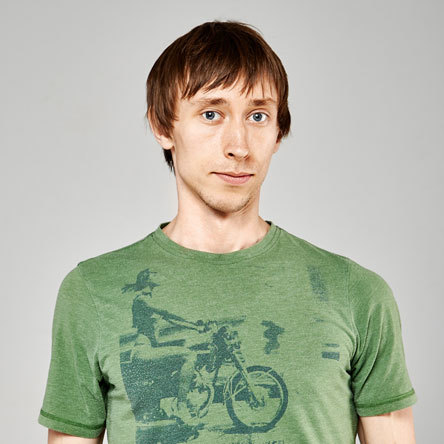
Practice with chaturanga, bakasana, a one-leg balance, cross-legged poses and slow breathing
A morning practice of 74 minutes at a calm pace with detailed explanations: there is more stretching and hip work than strength, but also a noticeable strength block for the arms and trunk (chaturanga in three rounds, bakasana, plank-type supports). The main load falls on the back of the legs, the lower back and the spine, the hip joints, the shoulders and the wrists; the abs work in chaturanga, downward dog and navasana, and there is a lot of breathing work and root lock at the start and at the end. The teacher explains the technique at length (tucking the pelvis, a straight back, relaxed shoulders and neck) and for the harder elements he names easier options: knees on the floor in chaturanga, bent legs in the folds, hands in front instead of a grip. The class finishes with slow calming breathing and savasana.
What to expect in this class:
- Kapalabhati, squat and bakasana (~0–15 min): The teacher greets the group and explains kapalabhati: seated with a straight back, in nabhi mudra and with the root lock drawn up; then a stretch forward in a deep squat, rising onto the toes and onto the heels, belly breathing, a first bakasana (if it is hard, the feet stay on the floor), a backbend with the crown of the head on the floor and the chest lifted, and a seated fold with a straight back
- Chaturanga and downward dog (~15–25 min): A prone backbend with the lower ribs pressed into the floor, a rest on the heels with belly breathing, then three rounds: tucked pelvis, bending the arms and lifting the knees off the floor (if it is hard, the knees stay down) and downward dog with relaxed shoulders and neck; the belly is drawn in on the exhale, as in uddiyana
- Seated: folds, twists and bridge (~25–40 min): A backbend with the hands on the feet and a fold with the belly on the thighs, then on each side hip opening with the heel by the perineum and a gentle twist (with lower-back pain, do an ordinary fold with a straight back); then a bridge on the back holding the ankles, lifting the pelvis, drawing the shoulder blades together and rotating the arms (if the inside grip does not work, hold from the outside) and navasana
- Bakasana, lunges and balance (~40–49 min): A second bakasana from a half-squat, a plank, a step forward into a wide lunge with the arm under the knee and lowering onto the forearms, a one-leg balance with the torso leaning forward and a grip on the standing leg (easier option: hands in front) and a twist in the wide stance with namaste or hands clasped behind the back; everything on both sides
- Gomukhasana, agni stambhasana and an arm support (~49–64 min): Kneeling with the legs one over the other — gomukhasana (easier option: sit on one heel) and a fold, then agni stambhasana with the shins parallel to the front edge of the mat and a fold with a straight back that engages the hip joints; between them a demanding arm support where the leg placed on the shoulder helps hold the legs — the hardest element of the class; on each side the root lock at the end of the exhale
- Finish (~64–74 min): Rising to standing and a forward fold with a straight back (bend the legs if the lower back rounds), holding the shins and pushing the pelvis up, then slow smooth breathing (if excitement appears, shorten the breath), savasana with the attention spread evenly through the body and a calm exit with a stretch
Oleg Lazurenko builds the class from simple to more complex: the body warms up gradually, the main part links asanas into connected blocks, and there is time for relaxation at the end. Choose a range of motion and pace that feel comfortable.


The review has been accepted and will be published after moderation.