


 Ukrainian
 Russian

There are no reviews yet.
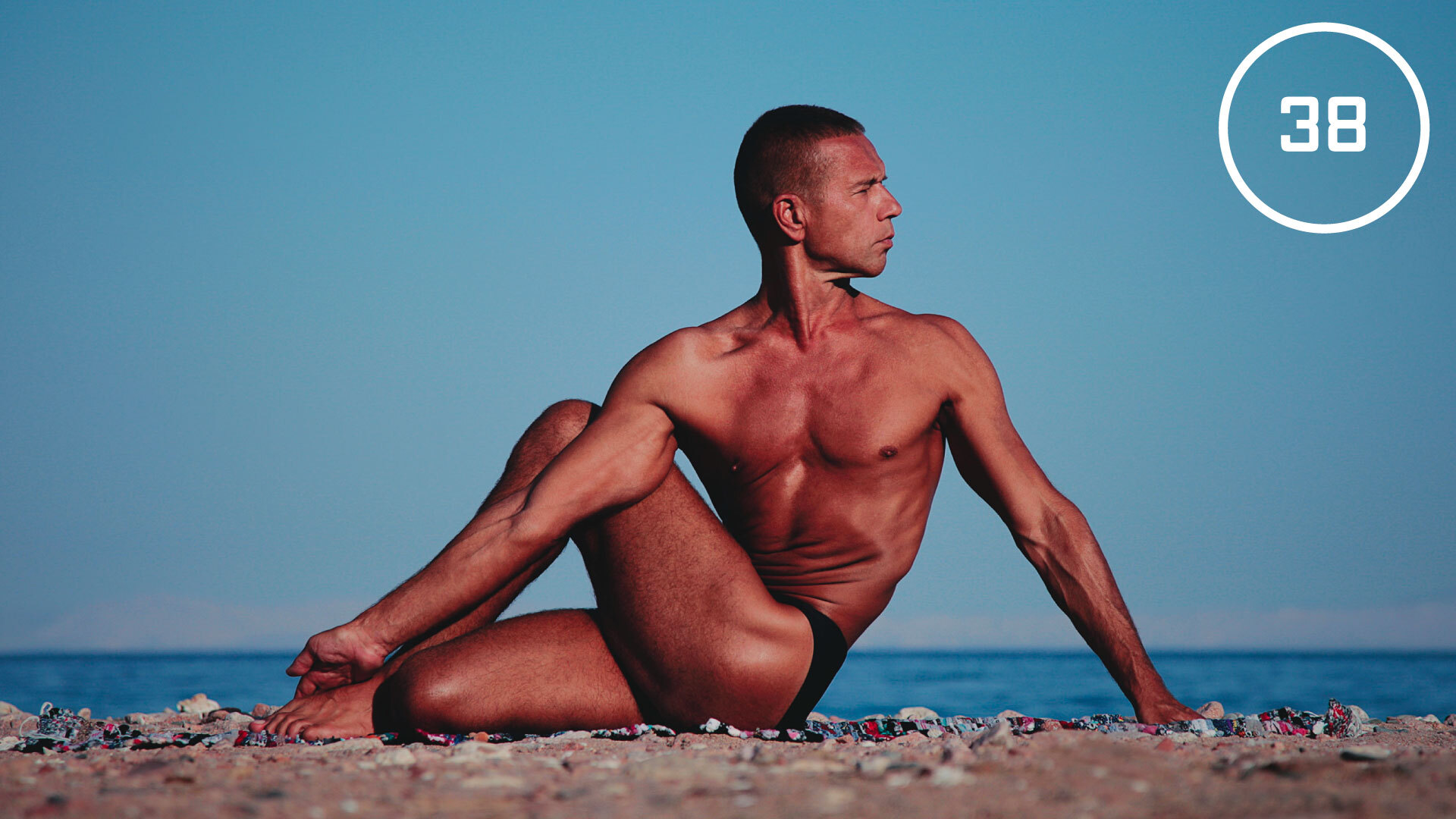
Practice with butterfly, prone lotus and lotus twists
A 74-minute practice at a slow, very calm pace: short cues and a count of breaths, almost no explanation. It is almost entirely stretching and hip opening with no strength elements; roughly 85% bends, lotus and twists held for 22 to 30 breaths, about 15% attention and stillness. It works the hips, knees, ankles, inner and back thighs, spine and shoulder girdle; an eye exercise opens the practice and about eight minutes of seated stillness with mudras close it.
What to expect in this class:
- Eyes, breathing and extended forward bend (0–11 min): Sitting in lotus with jnana mudra: eye rotations for nine counts in each direction, then about three minutes of rhythmic breathing. Arms up, axial lengthening and an extended paschimottanasana with the chest on the thighs and the face on the shins for about five minutes.
- Butterfly (11–31 min): Lying on the back, butterfly legs with the crown on the floor (matsyasana), forearms holding the ankles, about 25 breaths. Then a seated bend with the forehead to the knee and a turn of the torso, 22 breaths per side, and a bend with the belly toward the feet in butterfly for about 30 breaths. Lying relaxation follows, with the rhythmic breathing continued.
- Prone lotus (31–51 min): Lotus with one leg and then the other, an extended bend and a slide forward to lie on the belly: about 26 breaths. The legs are then released, the head turns to the side and you rest; the sequence repeats with lotus on the other side, with a jump to a squat between rounds. Hardest: full lotus; half lotus or simply straight legs work instead.
- Twists, wide legs and sitting (51–74 min): Lotus with a clasp behind the back holding the ankle, a bend with the grip and a twist with maximum turn, 30 breaths per side. Then a wide-legged bend for about 30 breaths. Finish: about eight minutes of sitting, jnana mudra, then sampurna mudra and stillness, with lying relaxation at the end.
This practice is designed for experienced practitioners: demanding elements can be simplified or replaced with easier variations, and you can come out of inversions and holds earlier.


The review has been accepted and will be published after moderation.