


 Ukrainian
 russian


There are no reviews yet.
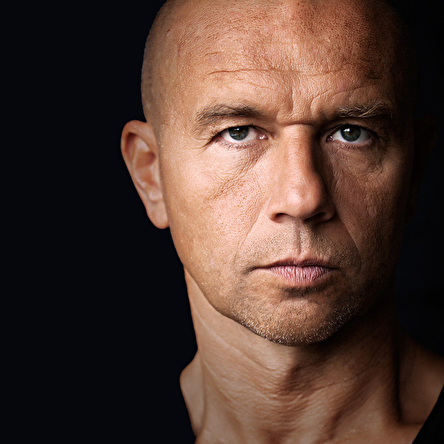
Lotus practice with headstands and held breath
A 65-minute practice at an unhurried pace with very little commentary: short cues and counting. The load is about half strength and half stretching: lotus, backbends, inversions and attention work. Breathing is reduced to a minimum in the holds and is abdominal in the transitions. It works the hips, knees, ankles, spine, shoulder girdle, neck and core.
What to expect in this class:
- Settling in and warm-up (0–14 min): Seated and prone: forward bends, a bend with the belly on the heels, a prone backbend, bends with one leg in lotus. Then a chin-supported inversion and a short relaxation.
- One leg in lotus, one leg by the neck (14–24 min): With one leg in lotus, the other is drawn to the neck and the head rests on the shin. From sitting you press up into a hand support and lower again with short holds. Repeated on the other side with rest between.
- Backbends and lotus on the back (24–39 min): A deep backbend from a lunge, catching the back foot from behind, then a shoulderstand with lotus legs and a backbend on the crown of the head with crossed forearms. The foot catch can be replaced by simply holding the leg. Relaxation.
- Inversions and moving lotus (39–65 min): After a brief explanation: headstand with lotus legs, push-ups on the hands with lotus, forearm balance, arm locks and twists in lotus, a tilted arm support, then standing balance and relaxation. The harder parts can be replaced by a plain headstand.
This class is designed for experienced practitioners: the full lotus is needed for the "pure" version, but the more demanding poses can be replaced with simpler ones — half lotus or virasana.

The review has been accepted and will be published after moderation.