


 Ukrainian
 Russian


There are no reviews yet.
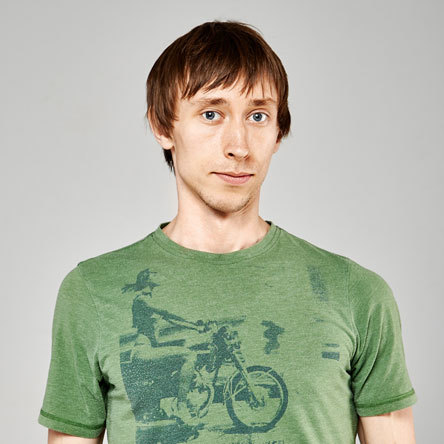
Dynamic flow with lunges, plank holds, inverted poses and a standing balance
A 76-minute practice at a medium pace: noticeably more movement and strength at first, then stretching, inverted poses and a calm finish towards the middle and end. The main load falls on the core and arms in the holds, the hips and glutes in the lunges and squat, the back of the legs, the back and the shoulders; the teacher puts special emphasis on breathing and control of the centre. He explains in detail how to remove the arch in the lower back, keep the neck long and draw the shoulder blades down, and names easier options for the plank holds, bakasana and the shoulderstand (holds from the knees or on the forearms, one leg instead of two, skipping the inversion if you have blood-pressure problems). The class was filmed in a studio during a real group session.
What to expect in this class:
- Warm-up and breathing (~0–9 min): Rising onto the toes, foot movements and rotations, then seated kapalabhati with an explanation of the technique: straight back, no rounding of the lower back, pulsing contractions of the belly
- Dynamic flow (~9–22 min): Several rounds of one sequence: arms up, forward fold, a lunge with the knee on the floor, downward dog, a step forward with a hand on the foot and a raised arm, then down onto the belly, hands lifted to shoulder level, a push-up, and coming up to standing through a rounded back; every round is led on the breath, “inhale – exhale”
- Squats and plank holds (~22–35 min): A standing hold shifting the weight onto the inner edges of the feet with calm breathing, then several sets of a low plank from the knees or on the forearms (no sagging belly, no arch in the lower back), alternating with downward dog; the teacher asks you to breathe into the belly and keep the root lock
- Seated twists and inverted pose (~35–51 min): Seated twists with the foot placed outside the knee, arms raised with clasped fingers and the shoulders turned; lying down, lifting the legs and pelvis with the feet in the hands (viparita karniasana), bakasana shifting the weight onto the hands, a deep squat with a fold and holding the toes — the most demanding elements of the class
- Shoulderstand and standing balance (~51–64 min): Sitting between the feet with the forearms and the crown of the head on the floor, then lying down, lifting the legs into plough (halasana) and shoulderstand (sarvangasana) on one or both legs; then a standing one-leg balance with the foot on the thigh and the arms raised, and a deep fold holding the ankles
- Finish (~64–76 min): A short release of the pelvis and a neck stretch, savasana for about ten minutes, a slow exit and sitting while watching the breath
Oleg Lazurenko builds the class from simple to more complex: the body warms up gradually, the main part links asanas into connected blocks, and there is time for relaxation at the end. Choose a range of motion and pace that feel comfortable.


The review has been accepted and will be published after moderation.