
 Ukrainian
 Russian


There are no reviews yet.
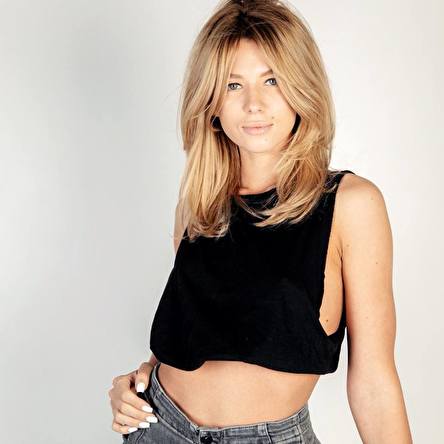
Reverse plank, clasp folds, crow pose and chaturanga, then held postures and eagle pose
A 91-minute practice at a medium pace: strength and stretching in roughly equal parts, plus a noticeable block of breathing exercises and a very detailed closing relaxation. The main load falls on the shoulders, arms and trunk (reverse plank with a leg lift, chaturanga, low crow pose), on the backs of the legs, the lower back and the hip joints in the folds, and on the shoulder girdle in the clasps behind the back. The class runs in stages: setting up and kapalabhati (about 10 minutes), a seated fold with uddiyana bandha, a dynamic block with short rests lying down, then a static mode with crow pose variations and eagle pose, and savasana at the end. The teacher names easier options (the knee on the floor in chaturanga, staying with the hips lifted in the reverse plank, low crow pose instead of harder variations, bent knees in the folds), explains the technique in detail and reminds you not to hold your breath. Filmed in a studio during a group class.
What to expect in this class:
- Setting up and kapalabhati (~0–10 min): Seated: the root lock, lengthening up through the crown, relaxed shoulders and face, attention gathered in front of the face; then several rounds of kapalabhati (pulse breathing) with pauses for a slow inhale and a long drawn-out exhale
- Seated fold, uddiyana bandha and ujjayi (~10–19 min): A fold over the extended legs (the knees may be bent) and a series of uddiyana bandha on a full exhale while keeping mula bandha; then an in-between rest on the back and ujjayi breathing, widening the belly, the sides and the lower back
- Reverse plank, rounded back and a backbend lying down (~19–37 min): Palms behind the hips, the pelvis lifted and each leg raised in turn with the toes pointed and the gaze changing direction (the easier option is to stay with the hips lifted); between rounds a rounded back and a fold; then a backbend lying down with an open chest, the «whistle» and «hiss» breaths, jnana mudra and a short savasana
- Dynamic part: clasp folds, twist, crow pose, chaturanga (~37–57 min): A seated fold with the hands clasped behind the back (the clasp pulled to the floor, then the fingers switched), standing side bends, a squat with the shoulder under the knee and a twist, low crow pose and a version with straight arms, a jump into chaturanga with a leg lift (the knee may stay on the floor), cobra with a bind of the arms; then squats on high toes with the arms forward, a forearm plank, a wide-legged fold, a side bend with the legs wide apart and a backbend lying on the belly holding the shins
- Static mode: crow pose, plank, clasp and eagle pose (~57–77 min): After the «whistle» and «hiss» breaths and a short rest, a standing fold with audible breathing; low crow pose with options (holding it, drawing one leg toward the belly, one leg back), a support on the palms and forearms, a backbend on the belly holding the shins, a fold with the clasp behind the back and eagle pose, sinking the hips lower
- Shambhavi mudra and savasana (~77–91 min): Seated shambhavi mudra with the gaze between the eyebrows, then about ten minutes of savasana with a step-by-step relaxation (contact with the floor, the lower jaw, the eyes, breath in the nose, the chest, the legs, the arms, the tongue) and a gentle exit
Daria Samoilova's classes follow the Yoga23 method: dynamic and static modes combine with breathing exercises to develop strength, endurance and flexibility, support work on posture and teach relaxation. Choose a pace and range of motion that feel comfortable.


The review has been accepted and will be published after moderation.