

 Ukrainian
 Russian

There are no reviews yet.
Standing flowing arm work, then lotus and matsyasana
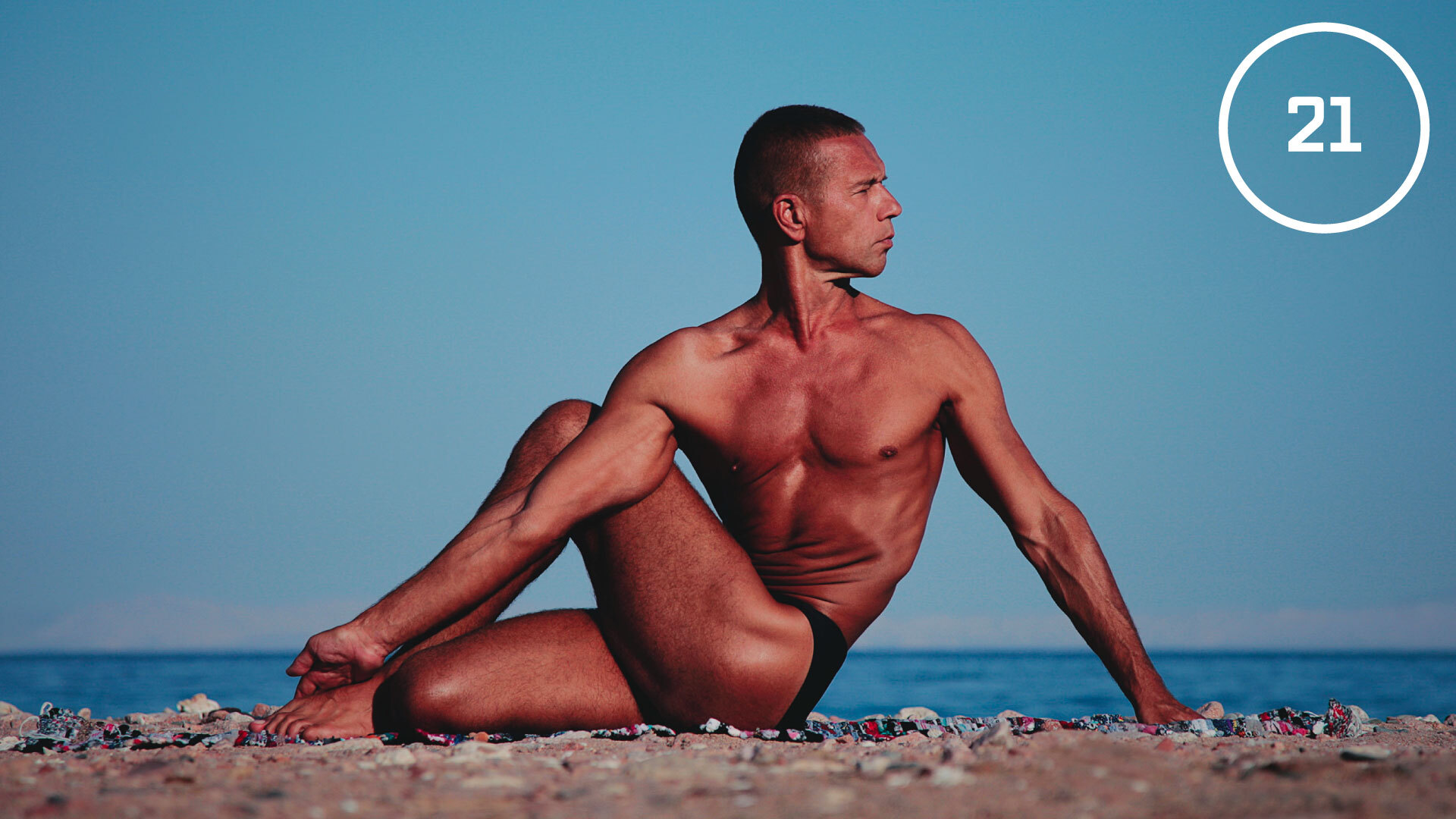
A 53-minute practice at a very calm pace: short cues and a count with the breath, almost no explanation. The first 35 minutes are standing — flowing arm movements that «gather» and place into the abdomen and head, steps with turns, neck and waist warm-up, and patting of the arms; then about 17 minutes on the mat with lotus. The load is gentle: shoulders, neck, lower back, and knees and hips in lotus, with almost no strength needed.
What to expect in this class:
- Standing and gathering arm movements (0–12 min): Feet shoulder-width, knees soft, hands on the lower dantian. Series of «prepare, gather, draw in, place in the abdomen» and «place in the head», steps with turns, weight shifts and winding arm movements. Then the neck (forward and back, turns, tilts) and the waist.
- Second and third round (12–35 min): The same sequence repeats twice more: arms, steps with turns, weight shifts, neck, waist, shaking out the arms and patting along them («down the inner side, up the outer side»). The count and breathing stay the same, and the load does not grow.
- Plough, lotus and matsyasana (35–44 min): On the mat a plough with a roll into a standing forward bend (uttanasana), then lotus and matsyasana in lotus: forearms crossed, elbows to the floor. Next a lying twist in lotus to both sides with one arm threaded through. Cross-legged sitting can replace lotus.
- Yoga mudra and mudras (44–53 min): A bend with a foot hold, lotus with a backbend and yoga mudra on each side, then a long sit in lotus with the palms up. It closes with jnana mudra and sampurna mudra; savasana comes last.
Technique in this class: the class begins with the “Ying style Yang Qigong” sequence — a short traditional Chinese “etheric” gymnastics sequence. A detailed explanation of the technique and its common mistakes is in the catalog video course by Andrei Siderski: Techniques Zero, KREST, Ying style Yang Qigong (theory + practice).
This practice is designed for experienced practitioners: demanding elements can be simplified or replaced with easier variations, and you can come out of inversions and holds earlier.


The review has been accepted and will be published after moderation.