


 Ukrainian
 Russian


There are no reviews yet.
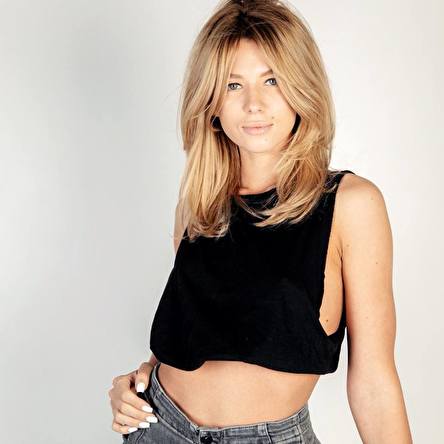
Forearm plank with leg lifts, then held squat, low crow pose and plough
A 95-minute practice at a medium pace: strength work and stretching in roughly equal parts, plus a pronounced breathing block (kapalabhati for four hundred exhales at a comfortable pace, a series of uddiyana bandha cycles, ujjayi with abdominal breathing, the «whistle» and «hiss» breaths, full breathing against the resistance of the palms). The main load falls on the shoulders, forearms and trunk in a forearm plank with alternate straight-leg lifts, on the backs of the legs and the lower back in folds with hand clasps and on one leg, and on the thighs and hip joints in virasana, twists and a deep squat. The dynamic part is built on repeats: the forearm plank alternates with virasana four times, and from the second half a static mode begins, with held postures and full breathing. The teacher names easier options: the leg lift can be done with the knees on the floor, the knees may be bent in folds, in the support on the hands behind the hips the heels may stay down, and the arm balance in the squat can be tried near a wall; she also reminds that uddiyana and inversions are skipped on difficult days of the cycle. Filmed in a studio during a group class.
What to expect in this class:
- Settling in, kapalabhati and uddiyana (~0–12 min): Seated with the palms up, root lock and a lengthening from the perineum to the crown; kapalabhati for four hundred exhales at a comfortable pace (with pauses if needed); then a seated fold with the palms on the feet and a series of uddiyana bandha cycles held after the exhale (on difficult days of the cycle, simply stay in the fold)
- Dynamic work: forearm plank and virasana (~12–29 min): Lying down, ujjayi and abdominal breathing, a ring fold holding the big toes, a roll and a jump back, a chest lift on the belly; a forearm plank with alternate straight-leg lifts (toes pulled toward you and pointed, the knees may stay down), each followed by virasana with the palms between the shoulder blades; four rounds; then virasana with the knees wide and the weight on the elbows, the head on the floor, a twist with the shoulder under the knee, the leg behind the shoulder and a lying twist with the hands behind the head
- Second series, downward dog and folds with clasps (~29–46 min): A repeat of the plank and the jump, downward dog with bent knees and a leg lifted; standing on one leg with the shin across the knee, a fold with the hands clasped (wrist, finger and mirror clasp; the standing knee may be bent) and a fold over the extended legs; the «whistle» and «hiss» breaths and shambhavi mudra, an intermediate rest on the back
- Backbends, twists and standing balances (~46–64 min): A fold on high toes, on the belly the legs up holding the feet and a push-up with a chest backbend and the forehead to the floor; seated leg lifts with the hands behind the head (the knees may be bent), a reverse tabletop (the heels may stay down, which lightens the load on the shoulders); lying twists to both sides; standing, a bear clasp behind the back with side bends, a fold with the leg lifted, a balance holding the foot with the leg parallel to the floor; a second round of «whistle» breaths and a rest
- Static mode: full breath, squat, folds, low crow pose and plough (~64–83 min): Lying down, full breathing with the palms on the lower ribs; a fold with the palms behind the heels; a deep squat with the arms under the thighs on high toes (about five cycles), then an arm balance with the shoulders under the thighs (near a wall if you like); a wide seated fold with a straight back, twists with the shoulder under the shin, folds with hand clasps; a low crow pose, a hip lift on the back and a plough pressing the feet into the palms
- Savasana and closing (~83–95 min): About eleven minutes of relaxation on the back: contact with the floor, the lower jaw, the eyes, the nose, the chest, the legs, the arms, the tongue and the whole body, then a stretch and a gentle roll onto the side
Daria Samoilova's classes follow the Yoga23 method: dynamic and static modes combine with breathing exercises to develop strength, endurance and flexibility, support work on posture and teach relaxation. Choose a pace and range of motion that feel comfortable.


The review has been accepted and will be published after moderation.