


 Ukrainian
 Russian


There are no reviews yet.
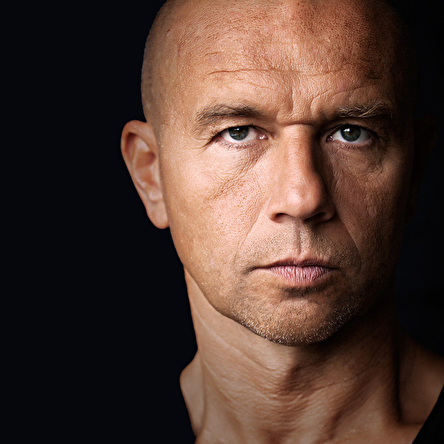
Practice with lotus, fish pose and anuloma viloma by pulse
A 56-minute practice at an unhurried pace: short cues and counts to the breath, almost no explanation. Stretching and hip opening outweigh strength; about a quarter of the time goes to breathing techniques and mudras at the start and the end. It works the backs of the legs, hips, knees, ankles, spine, neck and shoulders; little strength is needed, mobility in lotus matters most.
What to expect in this class:
- Kapalabhati, Magic Pass and mudras (0–6 min): Kapalabhati, sampurna mudra, a hands-along-the-body sweep (Magic Pass) and a condensing along the central axis. Jnana mudra with eye circles in both directions, inhaling through the tongue (sitali) with a kaki mudra hold, swallowing air, stretching the neck and simha mudra.
- Half lotus bends (6–18 min): Half lotus with a clasp behind the foot and a bend; the knee moved aside, the back pressed to the inner thigh, hands clasped behind and a foot catch. Repeated on both sides, with free breathing in the bend.
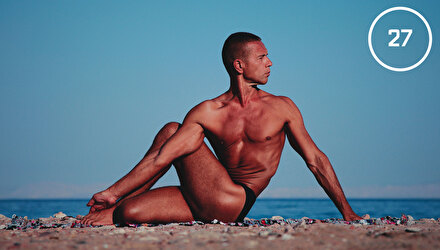
- Lotus, fish pose and twists (18–43 min): Lotus one leg at a time, fish pose with the crown on the floor and crossed forearms; a turn toward the upper leg and a lying twist, sliding onto the belly with a backbend; hands clasped behind in lotus, side bends with hands behind the head, yoga mudra. Lotus can be replaced with a comfortable cross-legged seat.
- Anuloma viloma and relaxation (43–56 min): Anuloma viloma by pulse: inhale, pause, exhale, pause, eight beats each, six cycles. Then jnana mudra and sampurna mudra in motionless sitting (about ten minutes) and a closing relaxation lying down.
This practice is designed for experienced practitioners: demanding elements can be simplified or replaced with easier variations, and you can come out of inversions and holds earlier.


The review has been accepted and will be published after moderation.