


 Ukrainian
 Russian

There are no reviews yet.
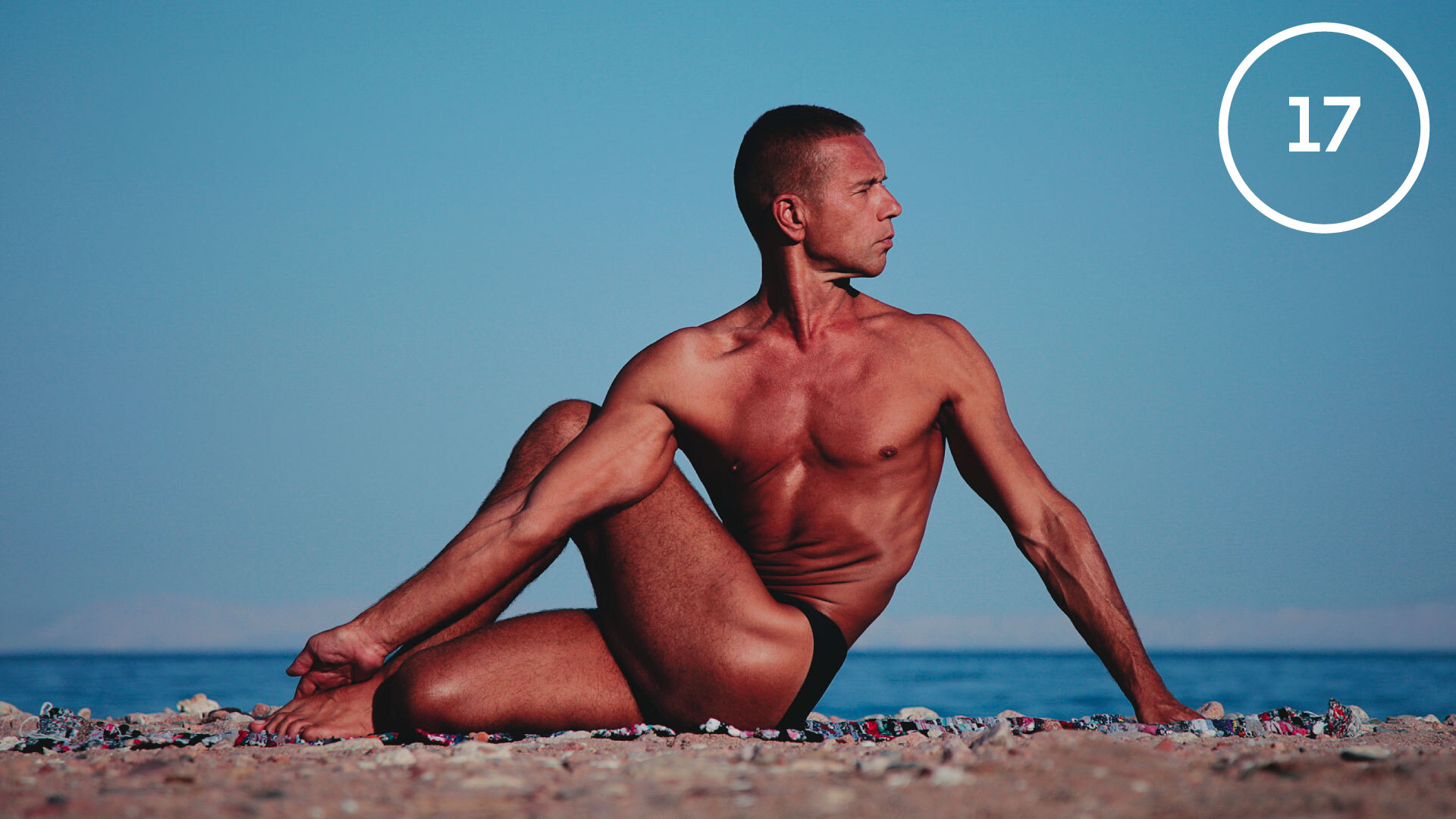
Kapalabhati, eye rotations, lotus and a headstand
A 65-minute practice at an unhurried pace with almost no commentary: the first 11 minutes are seated breath setup (three sets of nine slow breaths, kapalabhati, eye rotations), followed by forward bends, backbends, twists and a long lotus sequence. Stretching and hip opening outweigh strength, and the main strength element is a headstand with the legs in lotus. It works the backs of the legs, hips, knees, spine, neck and shoulder girdle.
What to expect in this class:
- Breath and attention (0–11 min): Seated in sampurna mudra: three sets of nine slow, even breaths, each followed by kapalabhati (58, 68 and 66 strokes). Then attention is led up and down the body, the eyes rotate 24 times counter-clockwise and clockwise, and three setting breaths follow.
- Forward bends, backbends and twists (11–32 min): Extended paschimottanasana (Ugrasana), a lying backbend with butterfly legs and the crown on the floor, a long plough, prone backbends holding the feet, virasana and ardha matsyendrasana, and bends with one leg straight. A link of plough, roll over and backbend repeats between poses. Then a backbend on the crown with crossed forearms, extended baddha konasana and upavistha konasana.
- Lotus and headstand (32–51 min): A prone backbend with simha mudra, butterfly with the forehead to the knee, a round-back forward bend. Then lotus work: an extended forward bend and a slide to lying on the belly with arms stretched forward, a headstand with the legs in lotus and twists to the sides, and yoga mudra in lotus on both sides. Hardest: the headstand in lotus, which can be replaced by a bend in half lotus or butterfly.
- Sitting and relaxation (51–65 min): Seated comfortably: free breathing, jnana mudra, then sampurna mudra and about ten minutes of stillness with a straight back. The practice ends with lying relaxation in shavasana.
This practice is designed for experienced practitioners: demanding elements can be simplified or replaced with easier variations, and you can come out of inversions and holds earlier.


The review has been accepted and will be published after moderation.