


 Ukrainian
 Russian

There are no reviews yet.
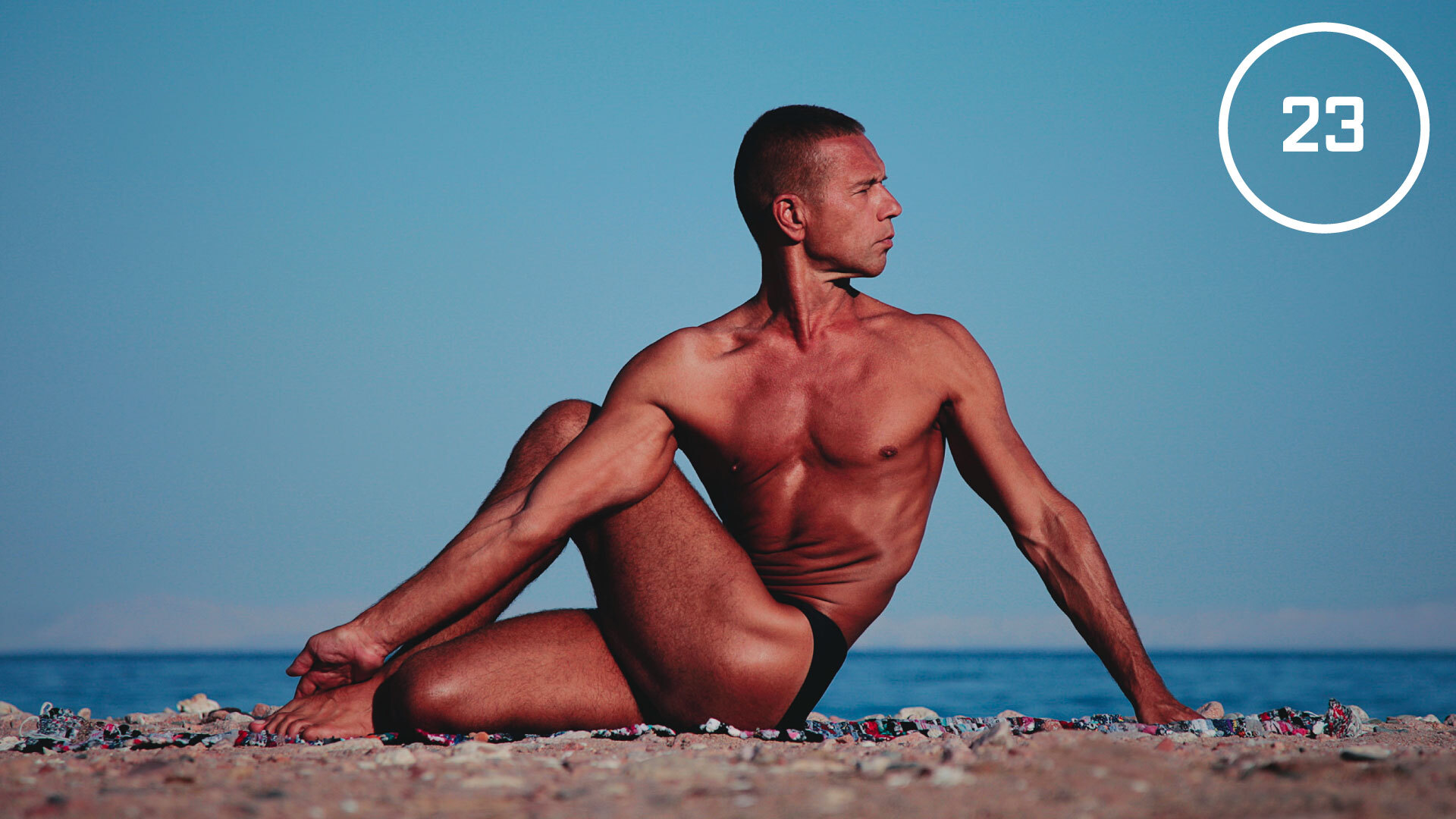
Series of backbends, bends and lotus with bridges and twists
A 34-minute practice at a medium pace: after a short introduction comes a dense series, every movement on an inhale or exhale, with short cues and no explanation. Backbends and forward bends combine with bridges, plough, twists and lotus; stretching and spinal work outweigh strength. The load falls on the lower back, thoracic spine, shoulders, hips, knees and ankles; the last six minutes or so are lying on the belly, breathing.
What to expect in this class:
- Introduction and first links (0–7 min): A short seated introduction, then a bend to the feet, an arm support with stretching, a closed plough and a roll to a squat. A prone backbend (bhujangasana), a wide-leg forward bend, a backbend holding the ankles, an arm support and ushtrasana.
- Twists, bridges and plough (7–15 min): Virasana with a twist and a bind behind the back, a bridge with the crown on the floor and a press-up, a long plough, padahastasana, virasana with a backbend and forearms crossed. Then seated twists with a clasp, a bridge holding the ankles from inside and a lying leg raise with the hands behind the head.
- Hips, backbends and half lotus (15–26 min): A half-throne pose, butterfly, dhanurasana and matsyasana, seated bends and twists, half lotus with clasped hands and a bend. Then lotus: lying with the knees to the chest and a hold, matsyasana without touching the crown, lotus with a twist and a bind behind the back, yoga mudra. Lotus is the hardest part; half lotus can replace it.
- Forward bend and breathing lying down (26–34 min): Lotus with clasped hands and a deep forward bend for a few minutes. Then lying on the belly, arms along the body, head turned to the side, about 5 minutes of breathing with a change of side, followed by sitting.
This practice is designed for experienced practitioners: demanding elements can be simplified or replaced with easier variations, and you can come out of inversions and holds earlier.


The review has been accepted and will be published after moderation.