


 Ukrainian
 Russian

There are no reviews yet.
Lotus in many forms, forward bends, headstand and mudras
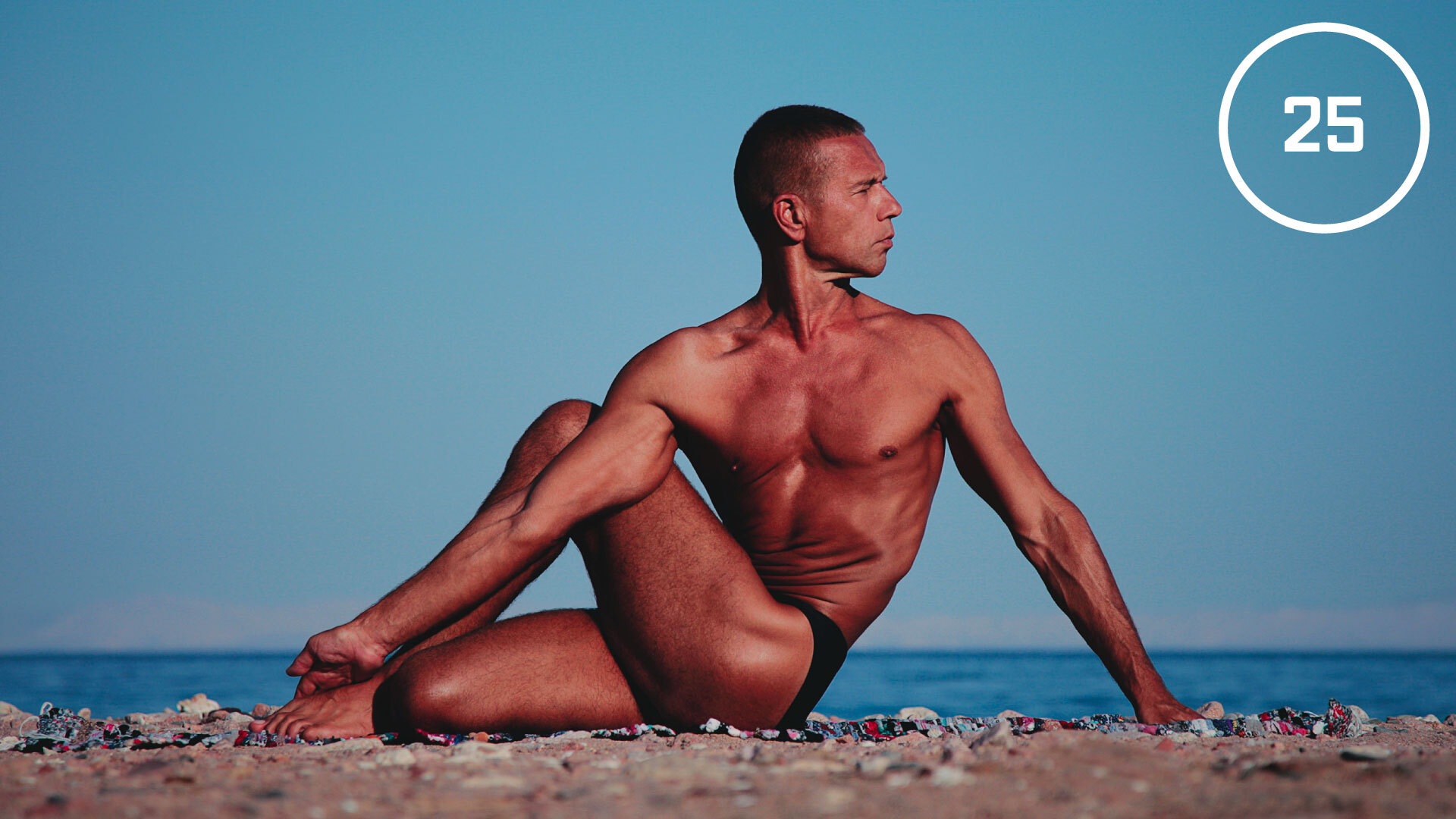
A 46-minute practice at a medium pace with short cues and a breath count and almost no explanation. More stretching and hip opening than strength: lotus and half lotus with forward bends, twists and backbends are at the centre, plus a short headstand with lotus legs. The load falls on the hips, knees, ankles, spine, shoulders and neck; the practice ends seated with jnana and sampurna mudras.
What to expect in this class:
- Forward bends and butterfly (2–13 min): Plough and a roll, a soft jump to standing, uttanasana with a long fold, squatting folds with the hands under the shins. Then butterfly with side bends, a bridge resting on the crown, extended backbends, a wide-leg fold and an ankle hold.
- Prone backbend and half lotus (11–20 min): A prone backbend holding the feet, a wide-leg fold, vajrasana. Half lotus with a clasp overhead and a fold, then a fold toward the thigh of the straight leg with a foot catch from behind the back, counted in breaths on both sides.
- Lotus, matsyasana and twists (19–34 min): Matsyasana with lotus legs without touching the crown to the floor, then long series of twists in lotus holding the knee and the back, on both sides. After that plough, a headstand, lotus and a lift onto the hands with the legs under the armpits. Then seated folds in lotus and side rolls, six times; a pause without exercises at 34–38 min.
- Yoga mudra, backbend and mudras (38–46 min): Yoga mudra with a fold in lotus six times on each side, then lotus with a backbend to the same count. A seated finish breathing to a count, jnana mudra and sampurna mudra. The hardest elements are lotus and the headstand; without them you can work in half lotus or cross-legged.
This practice is designed for experienced practitioners: demanding elements can be simplified or replaced with easier variations, and you can come out of inversions and holds earlier.


The review has been accepted and will be published after moderation.