

 Ukrainian
 Russian
There are no reviews yet.
Seated hips: agnistambhasana, gomukhasana, vamadevasana, bridge, crown No.75


Buy subscription from $13
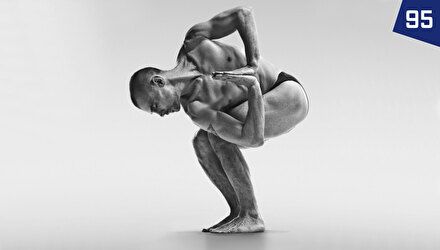
Seated hip opening: agnistambhasana, gomukhasana, vamadevasana, bridge and crown backbend, with long rests
A 74-minute practice at an unhurried pace with long holds: mostly stretching and hip opening, with little strength work (bakasana and a few elements with arm support). There are no quick links: after a short standing arm-flow and a fold with hand binds behind the back, the class contains several long rests on the back of a few minutes each. The main load falls on the hip joints, knees and feet in the seated positions, on the shoulders and chest in the hand binds, and on the neck and spine in the bridge and backbend. The teacher explains the technique in more detail here (foot position in agnistambhasana, a level pelvis in the twists) and gives an easier option for a harder variation: catching the second foot is optional.
What to expect in this class:
- Arm flow and folds (~0–19 min): Standing circles and “figure eights” with the arms, with turns and small bends and relaxed shoulders; then a fold with the arms woven together, bakasana, exercises on the belly catching the feet, a kneeling backbend and four hand binds behind the back; at the end nine free breaths and alternate-nostril breathing
- First rest and seated hips (~19–31 min): After five minutes of rest on the back, the legs are worked one at a time sitting: the foot to the knee and the heel forward, a fold over the leg, a leg on the shoulder leading to a “hanging” on the arms, vamadevasana and catching the big toes; the teacher gives cues for taking the foot more deeply
- Second rest and agnistambhasana (~31–47 min): About 6 minutes of rest on the back, then agnistambhasana with a forward lean (heels slightly forward, hands pressing on the knees), four hand binds behind the back, gomukhasana with a diagonal bind (the upper elbow slightly turned out) and twists with the foot caught from behind, to both sides
- Twist, bridge and backbend (~47–56 min): Seated twists and a return to the centre, a backbend on the back supported on the crown of the head with the forearms clasped, then a lift into the bridge with the palms by the neck (the hardest elements of the class), then the knees to the chest and the forehead to the knees; this is followed by about 2.5 minutes of rest
- Hips, padmasana and the “fish” (~56–68 min): A knee to the side and catching the foot from behind by the big toe, kurmasana, baddha konasana, an attempt at padmasana and matsyasana with a backbend on the crown, then the same to the other side
- Finish (~68–74 min): About 6 minutes of relaxation on the back and a few calm breaths sitting
Technique in this class: the class opens with the “Zero Crest” combination — two short etheric gymnastics techniques in a row, “Zero” and “KREST”: standing, with smooth arm movements at a slow, relaxed pace in rhythm with the breath. A detailed explanation of the technique and its common mistakes is in the catalog video course by Andrei Siderski: Techniques Zero, KREST, Ying style Yang Qigong (theory + practice).
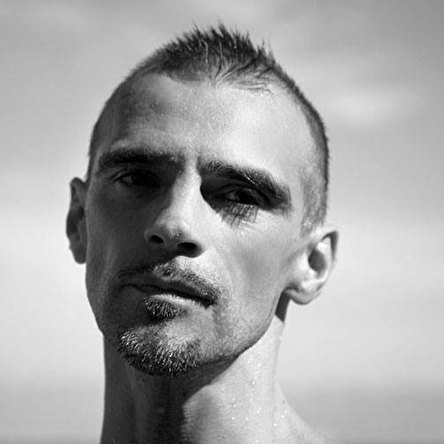
Andrii Medvedev builds the class around smooth transitions from one asana to the next and a breathing rhythm: movements are linked to the inhale and exhale. Choose a range of motion and pace that feel comfortable.


The review has been accepted and will be published after moderation.