


 Ukrainian
 Russian


There are no reviews yet.
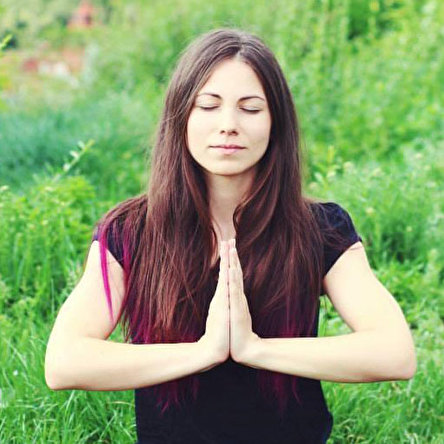
Practice with hand clasps behind the back, one-leg balances and yoga nidra
An 85-minute practice at a calm pace, beginner level: about 55 minutes of stretching, shoulder work and one-leg balances and about 20 minutes of yoga nidra (deep relaxation), plus quiet pauses with a seated meditation. The main load falls on the shoulders and upper spine (hand clasps behind the back, backbends), the back, feet and ankles, the hip joints and the leg stabilizers in the balances. The teacher explains the geometry of the poses, the position of the shoulders and pelvis and possible simplifications in detail, so the class suits beginners and anyone who wants to finish with deep relaxation.
What to expect in this class:
- Setup, lying work and rabbit (~0–16 min): Seated with a straight back and belly breathing, lying relaxation with crossed legs on both sides, a stretch, leg lifts with the head and ankle circles, sphinx, rabbit pose and lion’s breath (simha mudra)
- Hand clasps, bridge and squats (~16–33 min): Folds with wrist and finger clasps behind the back (shoulders back, elbows straight), iron bridge, twists of the bent legs, a fold with the hands under the feet, a deep squat with a twist of the torso, cobra, cat and a seated meditation with kurma mudra
- The “slingshot”, the “bowl” and balances (~33–58 min): A rounded fold with the elbows at the thighs (the “slingshot”), the “bowl” on one leg holding the foot with a backbend, natarajasana, a fold with the leg raised, lunges resting on the instep, a one-leg balance with the leg extended, a crescent with the hand on the back of the head (both hands on the floor if it is hard), a backbend with fists at the lower back
- Yoga nidra and finish (~58–85 min): Seated preparation, then about 20 minutes of yoga nidra: alternate-nostril breathing counted up to 18, then a step-by-step tour of attention through the body from the feet to the head; coming out, stretching and three “whistling” breaths seated
The class is built step by step: from preparing the body and breath to the main part and a calm finish. Practise at a comfortable pace, using the suggested easier options, to gain tone, mobility and calmer breathing.


The review has been accepted and will be published after moderation.