


 Ukrainian
 Russian


There are no reviews yet.

Warm-up, balances, half moons, Bakasana and an arm support with a leg on the shoulder
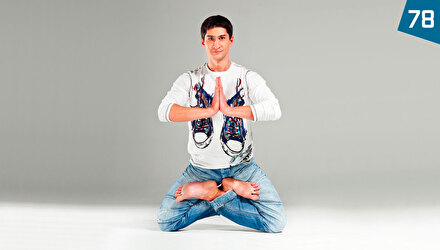
An 80-minute practice with a warm-up, one-leg balances, folds, a long sequence with arm supports and a series of half moons. The main part includes Bakasana (crane pose), an arm support with a leg on the shoulder and a wide-stance fold, and the class ends with backbends on the belly, lower-back stretching and Shavasana. The load is strength and balance with a noticeable share of stretching, at a moderate pace with many holds. Viktor explains the work of the feet, pelvis and shoulders in detail and offers simpler options for the harder elements.
What to expect in this class:
- Warm-up and balances (0–25 min): Knee circles, deep squats on the toes and with the knees apart, pelvic circles, one-leg balances with the knee lifted and turned out, heel to the buttock, and side stretches. The emphasis is on the abdomen and thighs.
- Ujjayi, folds and plank sequences (25–50 min): Ujjayi breathing that expands the rib cage, shoulder circles, deep folds lengthening the spine, then a sequence of a step back, high and low plank and downward dog. Then Ardha Chandrasana with hip opening on both sides.
- Bakasana, lunges and wide stance (50–70 min): Preparing for Bakasana: armpits on the knees, an arm support with a gentle lift of the feet, several rounds. Then low plank, downward dog, deep lunges with the arm up and the front leg straightened, and a wide-stance fold holding the ankles.
- Arm support with a leg on the shoulder and relaxation (70–80 min): A squat with palms on the floor; a simpler option is to sit on the hands without lifting the feet. Then an arm support with a leg on the shoulder, a backbend holding the toes, lower-back stretching, knees to the belly and Shavasana.
Recorded during a live group class: Viktor builds the geometry of each asana in detail, drawing on his knowledge of physiology, anatomy and biomechanics.


The review has been accepted and will be published after moderation.