

 Ukrainian
 Russian


There are no reviews yet.
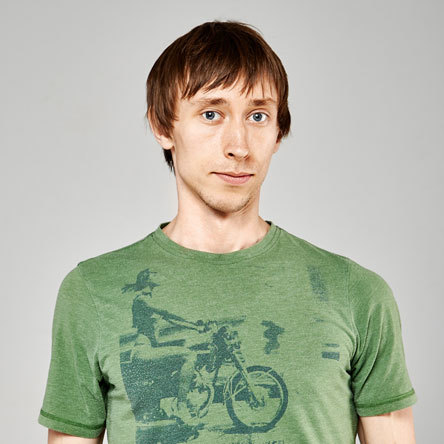
Practice for the abs and arm support: kapalabhati, uddiyana bandha, plank, a prone backbend and leg raises
A 76-minute practice at a medium pace with a noticeable strength emphasis in the first third: the main load goes to the abdominal and pelvic-floor muscles, the shoulder girdle and arms, the thighs and glutes, and the back extensors in a long prone backbend. There is more strength and breath work here than ordinary stretching: kapalabhati with up to 240 exhalations per round, twelve rounds of uddiyana bandha in a half squat, a plank on the forearms and an inclined plank, then leg raises at 30, 60 and 90 degrees lying on the back. The teacher keeps reminding about the root lock and the drawn-in belly and stops to explain the breathing separately. Easier options really are offered: knees on the floor in the plank, bent legs in the folds and leg raises, shifting the weight onto the hands and lifting the feet only if it works. The practice ends with twelve whistling exhalations, square breathing and a long savasana with an attention technique on the breath.
What to expect in this class:
- Settling in, kapalabhati and uddiyana (~0–10 min): Sitting with the eyes closed: belly breathing with the root lock drawn up, nabhi mudra; kapalabhati for up to 240 exhalations per round (several rounds if needed) and 12 rounds of uddiyana bandha in a half squat with a hold after the full exhale
- Fold and plank work (~10–20 min): A seated forward fold with the arms stretched out (if the back rounds, the legs may be bent), then support on the forearms, a plank with the belly drawn in and the pelvis tucked, an inclined plank on the palms (knees down when tired), the inverted-V pose with a long back and a lunge with the arms reaching forward, which the teacher says gets heavy
- Arm balance and prone backbend (~20–32 min): A pause to explain the breathing: the teacher asks to breathe the way he calls it out; then shifting the weight onto the hands with the knees at the armpits and, if it works, lifting the feet off the floor; after that, lying on the belly with the hands locked behind the back and a long lift of the torso and legs, changing the finger interlace, then relaxing sitting on the heels with the torso on the thighs
- Abs on the back and standing folds (~32–52 min): Resting on the back, then leg raises to 30, 60 and 90 degrees with the lower back pressed down (the legs can be bent) and a fold holding the toes; standing, a fold with a rounded back, a wide squat with head turns, a fold with the hands on the floor and the forehead towards the knees, a half squat with the hands under the thighs and heel raises, arms up in a lock and a fold with the lock behind the back (one arm up, the other behind the back)
- Seated side work and whistling breath (~52–66 min): Sitting with the legs raised in front (they may stay bent) and the hands behind the head, then a side stretch with support on one palm and the root lock drawn up, to both sides; twelve whistling exhalations with the gaze softly drawn to the point between the brows and square breathing with pauses after the inhale and the exhale
- Savasana and exit (~66–76 min): A long savasana of about nine and a half minutes with a technique: on the inhale the attention travels from the tip of the nose down to the solar plexus, building up energy through attention and deep breathing; a gentle exit through moving the fingers and stretching, then a short sit with the eyes closed
Oleg Lazurenko builds the class from simple to more complex: the body warms up gradually, the main part links asanas into connected blocks, and there is time for relaxation at the end. Choose a range of motion and pace that feel comfortable.


The review has been accepted and will be published after moderation.