


 Ukrainian
 Russian

Неймовірні відчуття. Легені розгорнулися на всю площу тіла, хоча здавалося, що я наздоганяю щось втрачене. Після - тиша в середині і ззовні. Щиро дякую.
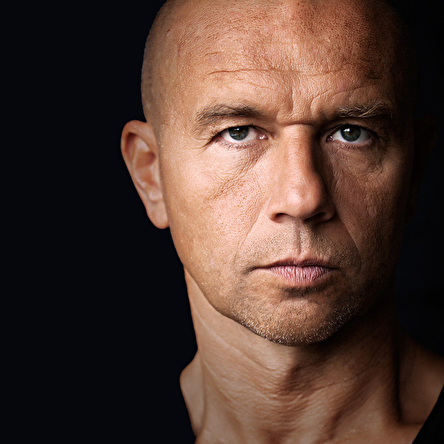
Kapalabhati, forward bends with long counts and lotus
A 32-minute practice at a slow, even pace: short cues and a count on each inhale and exhale, with almost no explanation. Stretching and spinal mobility dominate, strength demands are small; breathing techniques (kapalabhati, bhastrika) open and close the practice. The main load falls on the backs of the legs, hips, knees and ankles (lotus), the lower back and the shoulder girdle.
What to expect in this class:
- Breathing and entry (0–4 min): Seated kapalabhati for 108 exhalations, then calm breaths. Next a plough with the hands behind the head and a roll up into standing.
- Standing and seated bends (4–14 min): A deep standing forward bend for 8 breaths, then dynamic lifts and bends with a backbend counted up to 18. Seated with the legs apart, an ankle hold and forward bend for 18 breaths, then a variation resting on the elbows with the head relaxed.
- Lotus with forward bends (14–26 min): Lotus with a forward bend for 18 breaths on each side, then with the arms raised, the pelvis lifted and a sliding forward backbend. The hardest element for the knees: if limited, keep half lotus or sit cross-legged.
- Backbend, bhastrika and mudras (26–32 min): A prone backbend holding the feet with a gentle rocking, then a seated bend toward the legs for a few breaths. It closes with bhastrika (36 cycles), jnana mudra and sampurna mudra, then still sitting.
This practice is designed for experienced practitioners: demanding elements can be simplified or replaced with easier variations, and you can come out of inversions and holds earlier.
l********[email protected]


The review has been accepted and will be published after moderation.