


 Ukrainian
 Russian
There are no reviews yet.
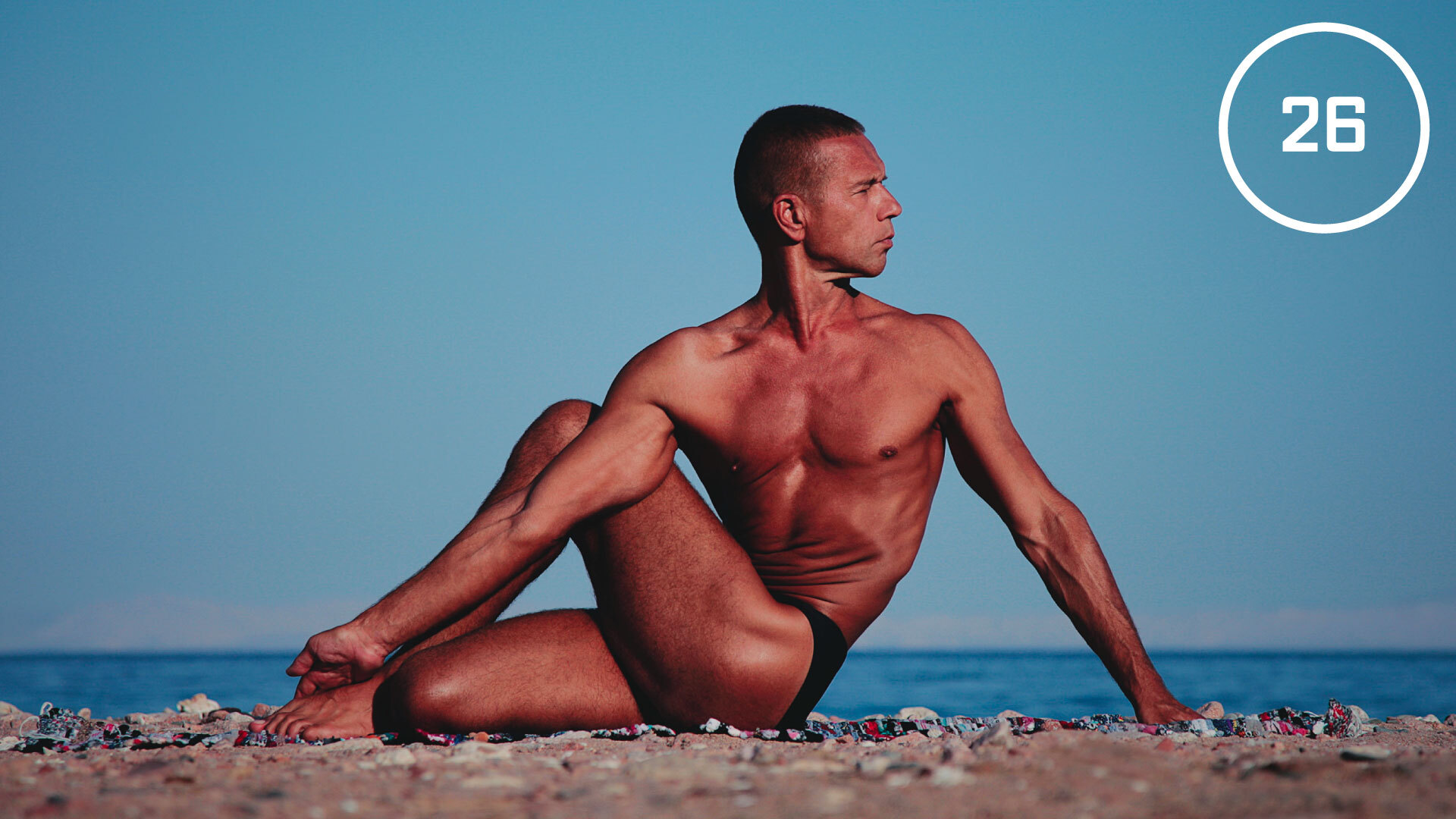
Cycle 38 · 26 (44 min): master series: legs behind the head, lotus headstand, mudras

Buy subscription from $13
Master series with legs behind the head, a lotus headstand and mudras
A 44-minute practice at a measured pace: a master series where a clear form and a firm hold in each pose matter more than speed. In transitions the breathing is free, as many cycles as needed. Stretching, backbends and strength elements in roughly equal parts, loading the hips, lower back, shoulder girdle, abdominals and neck. About five minutes of introduction at the start, then only brief cues.
What to expect in this class:
- Introduction and warm-up (0–8 min): A short introduction to the idea of a master series (the series is seen beforehand on an inner screen), then a standing fold, halasana and chakrasana, a backbend with chest and chin on the floor, and a hand support. Holds are firm and breathing in transitions is free.
- Strength and hips (8–21 min): An ankle grip and simha mudra, anjaneyasana, a squat with the elbows under the knees and a rise onto the toes, a straight-leg fold. Then legs behind the head lying down, a long halasana with a clasp, a bridge on the knees, a backbend in vajrasana and seated twists with a clasp and a fold on both sides.
- Bridge, hand balance and butterfly (21–30 min): A bridge rolling onto the crown, half lotus with a leg behind the head and a hand support (thighs horizontal) on both sides, plough, bhujangasana, a wide-leg fold. Then butterfly with matsyasana, side bends and an extended forward bend. The hardest elements can be simplified by keeping the half lotus and the fold.
- Headstand and sitting (30–44 min): Plough, a lying foot hold, a headstand with padmasana and twists to both sides, then paschimottanasana. The finish: sitting with breath, jnana mudra and sampurna mudra for about 8 minutes. The practice closes with a rest lying down.
This practice is designed for experienced practitioners: demanding elements can be simplified or replaced with easier variations, and you can come out of inversions and holds earlier.


The review has been accepted and will be published after moderation.