


 Ukrainian
 Russian

There are no reviews yet.
Practice with lotus, arm balance, matsyasana and nadi shodhana
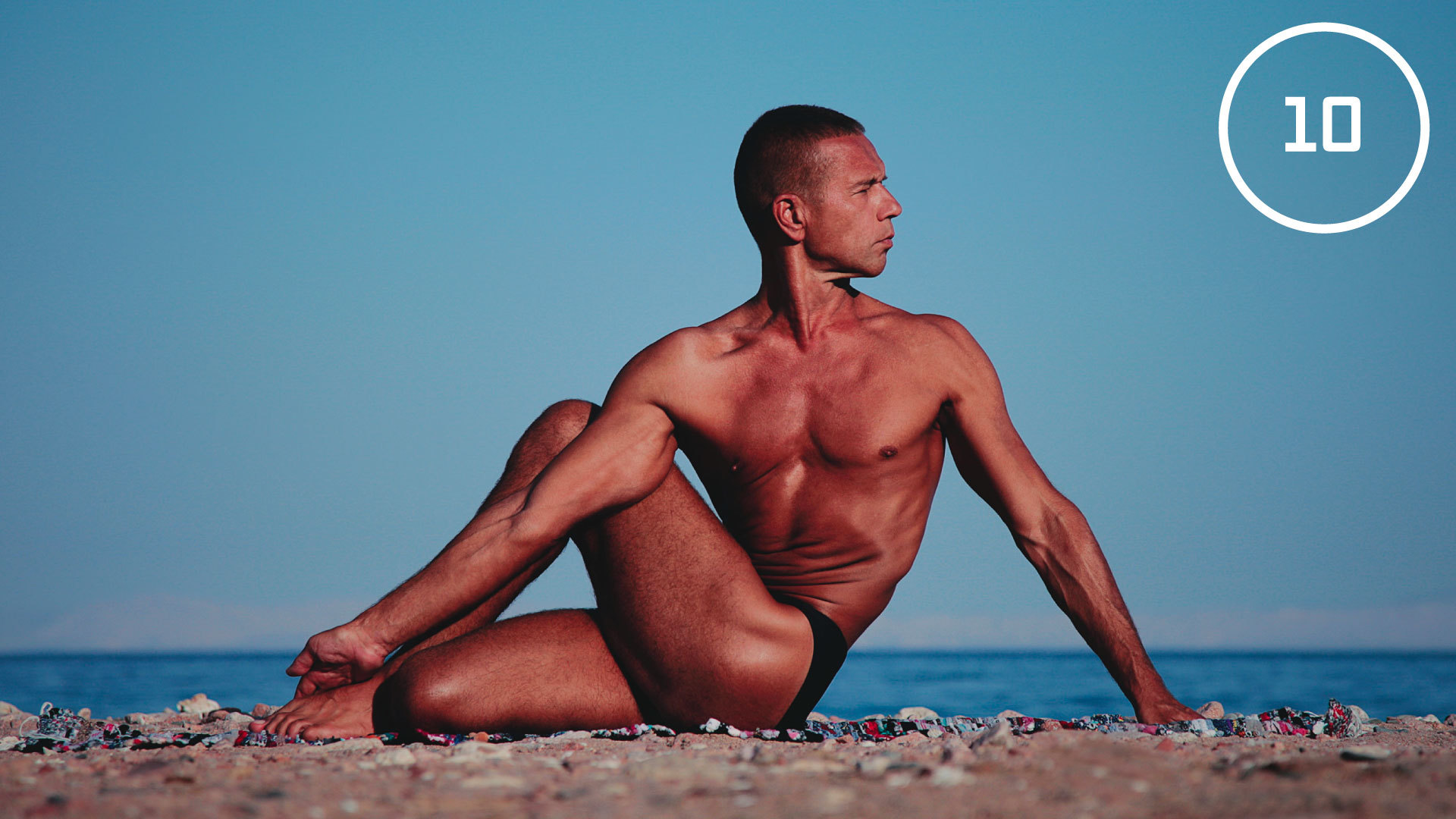
An 81-minute practice at an unhurried pace: short commands in English, almost no explanation, counting to the breath up to 18. Stretching, backbends and breathing techniques outweigh strength; the strength element is a hand support with the legs in lotus. It works the hips, knees, feet, lower back, spine, shoulder girdle and wrists; pranayama and a long seated stillness close the practice.
What to expect in this class:
- Kapalabhati and setup (0–13 min): Sampurna mudra, two sets of 108 kapalabhati, hand work in front of the body and jnana mudra with 24 eye circles counterclockwise. Then sitali with a swallowed breath, khechari mudra and a head tilt back, about six rounds, and a short rest.
- Bends, backbend and lotus on the hands (13–46 min): Paschimottanasana for 18 breaths, chakrasana, a prone backbend holding the feet for 18 breaths, a jump to a squat and a bend holding the foot for 17 breaths per side, then a hand support with the legs in lotus (foot hooked at the armpit) for 18 breaths and matsyasana resting on the crown with crossed forearms. Shavasana between blocks; the hand support can be replaced with sitting in lotus.
- Lotus with binds behind the back (46–63 min): Lotus with a forward bend, catching the ankle from behind with one hand, 18 breaths per side; then both hands bound behind the back (baddha padmasana), deep grips and a bend down, again in mirrored lotus. Hardest: deep lotus and the binds; stay in half lotus or use a single bind instead.
- Nadi shodhana and stillness (63–81 min): Four cycles of nadi shodhana with alternating nostrils and eye movements up and down, touching elbows when switching hands, then seated stillness. At the end sampurna mudra, a short relaxation and shavasana.
This practice is designed for experienced practitioners: demanding elements can be simplified or replaced with easier variations, and you can come out of inversions and holds earlier.



The review has been accepted and will be published after moderation.