4 short sequences of 19 to 32 minutes: spine, core, shoulders, twists and balance
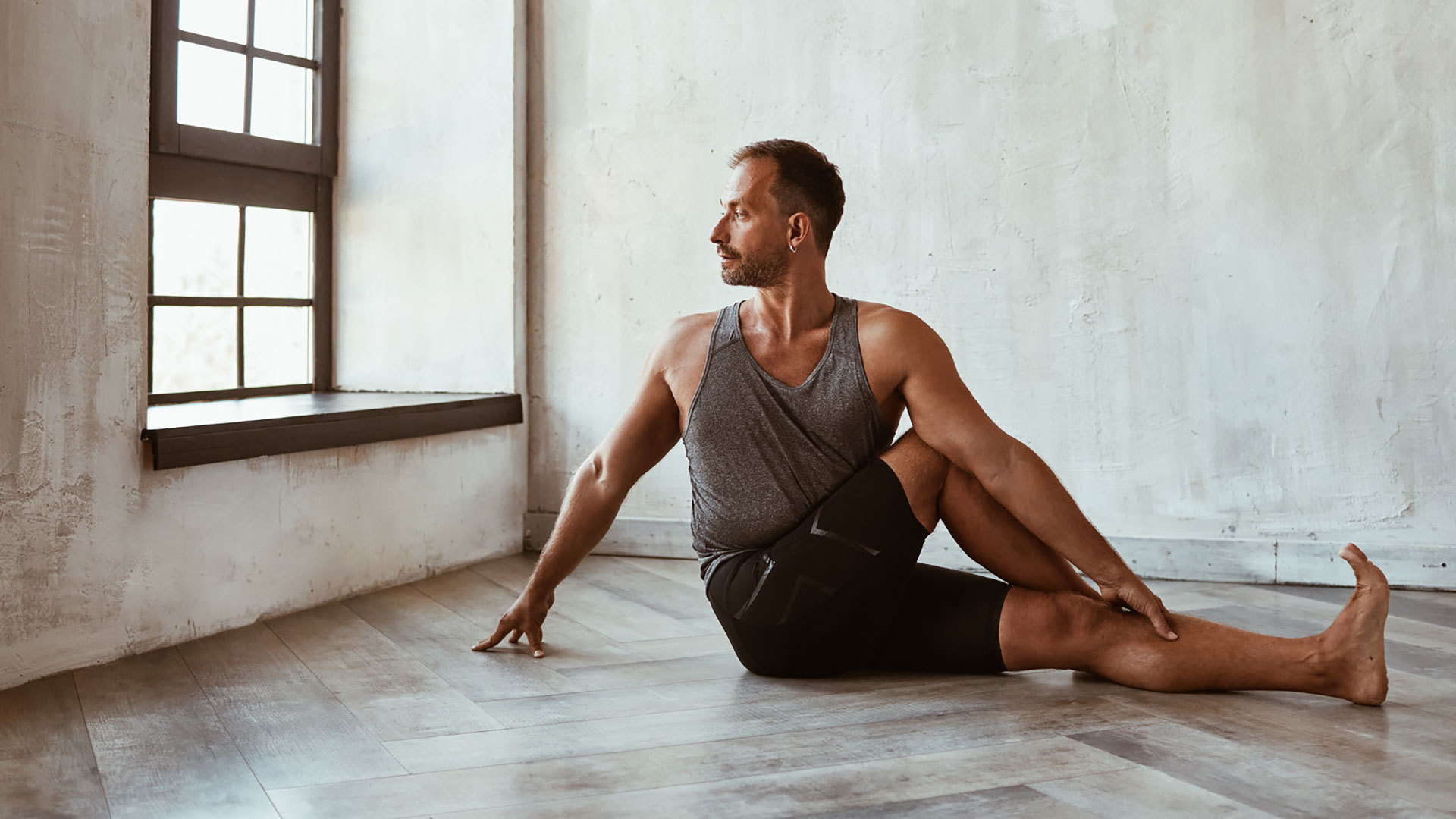
Four stand-alone yoga sequences with Pavel Makarin totalling about 102 minutes: 19 to 32 minutes each, so any one can be taken on its own for daily practice. Each has its own emphasis: spine mobility and backbends; abs and obliques; arm supports and shoulder girdle; twists and balance. Done on the mat with no equipment, mostly holding for a few breaths, with detailed explanations; the load is moderate to noticeable, more strength and mobility work than relaxation. The sequences close with short seated breathing, without Savasana.
What to expect in this sequence:
Sequence 1: spine, backbends and the iron bridge, 32 min: Starts seated in Virasana with a hand lock overhead and a neck stretch. Then on all fours a backbend and a rounding of the spine, a forearm support with the heels pushed back, a wrist lock behind the back lying on the belly and a shoulder stretch with the arms crossed. Next come a wide Virasana with a twist, a cat movement with a leg, Ustrasana, Adho Mukha Svanasana, a shin grip lying down, a fold lengthening the back, twists, Halasana and an iron bridge on the heels. It ends with about 30 seconds of Kapalabhati. Focus: spine and shoulder mobility with moderate strength work; the pace is calm, holds are short but precise.
Sequence 2: abs and obliques, 26 min: Opens with Kapalabhati. Lying down: a torso lift holding the knees, a half bridge, then dynamic lifts with the palms pushed to the knees (around 30 repetitions) and oblique work, static and dynamic (20 repetitions or more each side). After Paschimottanasana, about five seated breath cycles with gentle hand pressure on the belly. The central exercise is a hanging support on the hands with crossed legs and leg switches in three rounds (6, 8 and 10 switches), each followed by Ustrasana as a counter. At the end more lifts with the heels pressed down, a half bridge or Viparita Karani Mudra and cooling Sitali breathing. The core-heaviest sequence of the set; easier options keep the feet supported and the wrists are loaded with care.
Sequence 3: arm supports and shoulder girdle, 19 min: The shortest and most strength-oriented sequence. It begins in a plank: a change of leg position, 12 push-ups (from the knees if needed), a 20 to 30 second Chaturanga hold, then Uttanasana and Bakasana (feet lifted, or toes on the floor). Next: shoulder rotations lying down, lifting the shoulders to the ears in Adho Mukha Svanasana, forearm support variations, a wide support and crossed arms to release the shoulders. Then a front-of-thigh stretch on the forearms and lunges with a wrist lock. It ends with shoulder rotations with the shin over the thigh, squeezing and releasing the palms, and Kapalabhati. The pace is moderate and repetitions are counted aloud.
Sequence 4: twists and balance, 25 min: Starts in a wide stance with the feet turned out and a root lock: folds, horizontal torso twists, rolls left and right, Prasarita Padottanasana and Parivrtta Trikonasana with a hand on the pelvis (balance). Then folds with the hands under the knees (a spider, with an ordinary fold as the easier option), seated folds towards one leg (Janu Shirshasana), a seated leg raise with an Upavishtakonasana alternative, and a hands-and-knees position gripping the shin to open the chest. Towards the end lunges with a thigh stretch and a twist, Uttanasana with a leg in half lotus, Natarajasana and Vrikshasana, with short Kapalabhati between parts. The load is stretching, twists and balance, with less strength.
The sequences differ in emphasis: the first is general (spine and shoulders), the second targets the abs, the third the arms and shoulders, the fourth balance. The harder exercises come with easier variations.



 Ukrainian
 Russian


 View files



 Download for the PC
 Download for the phone


 Sequence
 Sequence
 Sequence
 Sequence
The review has been accepted and will be published after moderation.