Handstands: From Hand Preparation to Basic Handstands
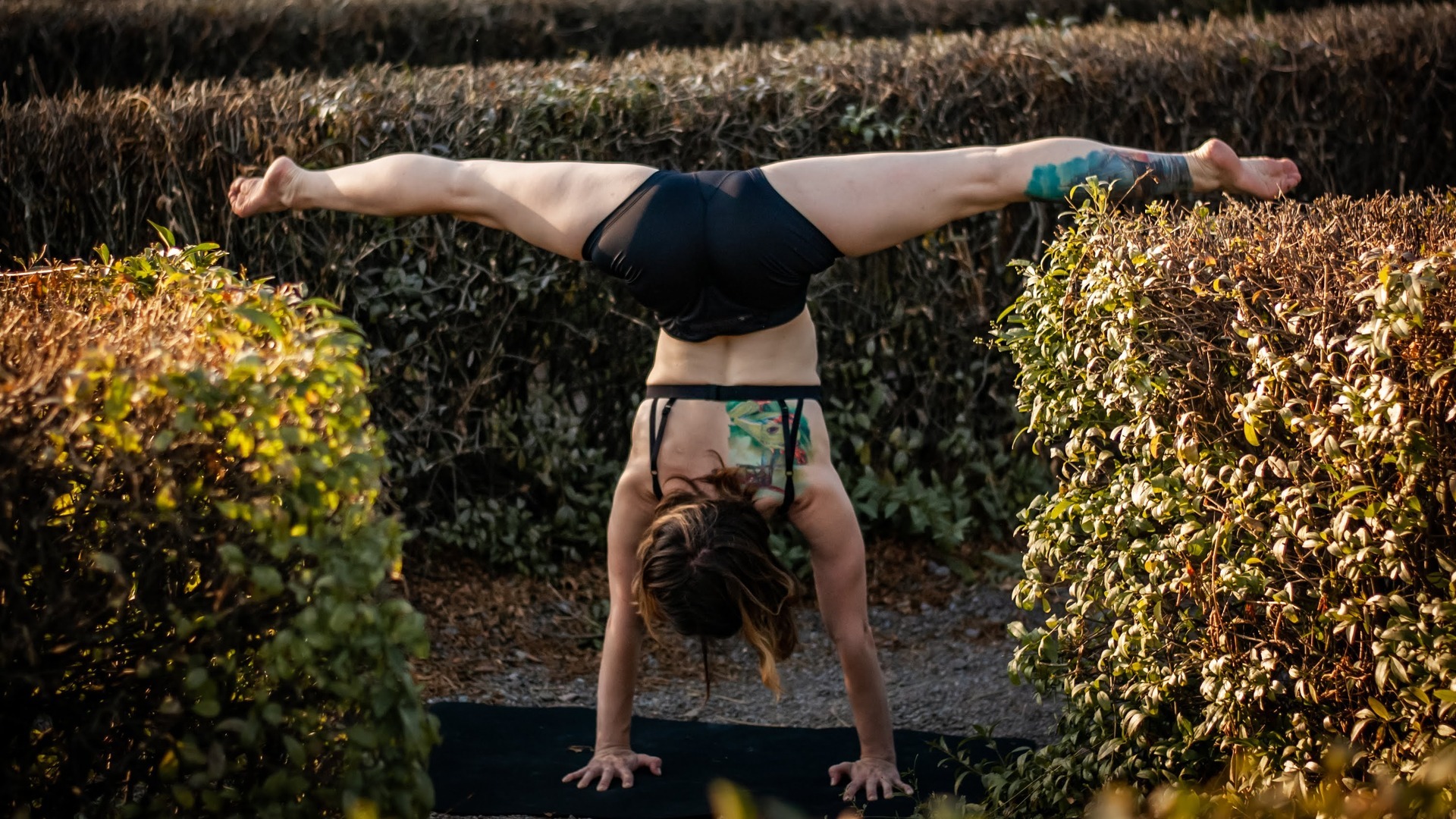
A handstand isn’t about strength or flexibility — it’s about technique. Taisiya Pavlyukova breaks it down into clear steps: how to place your hands, how to set your pelvis and lower back, how to kick up and find your balance. Four lessons, a wall instead of a spotter — and your first handstands become achievable, even if you’ve never been upside down.
Many people put off handstands for years: “I’m not strong enough”, “I’m afraid of falling”, “I’ll never manage it”. What you really need isn’t strength but understanding: where to press with your fingers, why the pelvis collapses, and why a powerful leg swing won’t take you to vertical. That’s exactly what this series teaches. Taisiya Pavlyukova has been teaching yoga for over 10 years; she coaches athletes and trains yoga teachers.
Four lessons, about 112 minutes in total: two 15–17-minute technique sessions with detailed explanations and two dynamic practices of 34 and 45 minutes that bring it all together. You’ll need a mat and a free section of wall.
Who it’s for:
Beginners. You can start from zero: every element is first practised standing and on all fours, then at the wall. Kicking up without reaching the handstand is a normal stage, and Taisiya shows you how to get through it.
Experienced practitioners. Refine your kick-up, learn to balance away from the wall, jump into a handstand from both feet and build handstands into your practice — for example, in a flow through Chaturanga.
What’s inside:
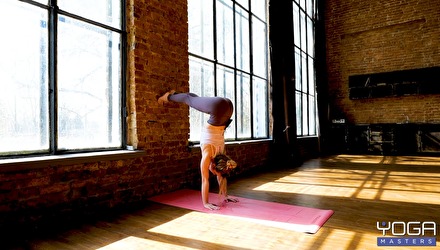
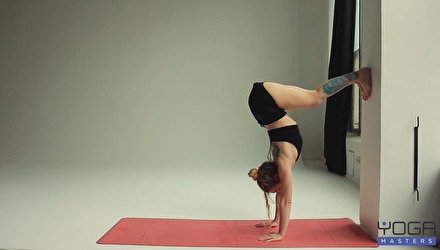
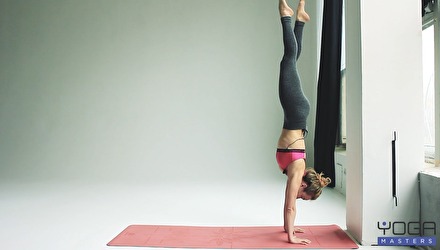
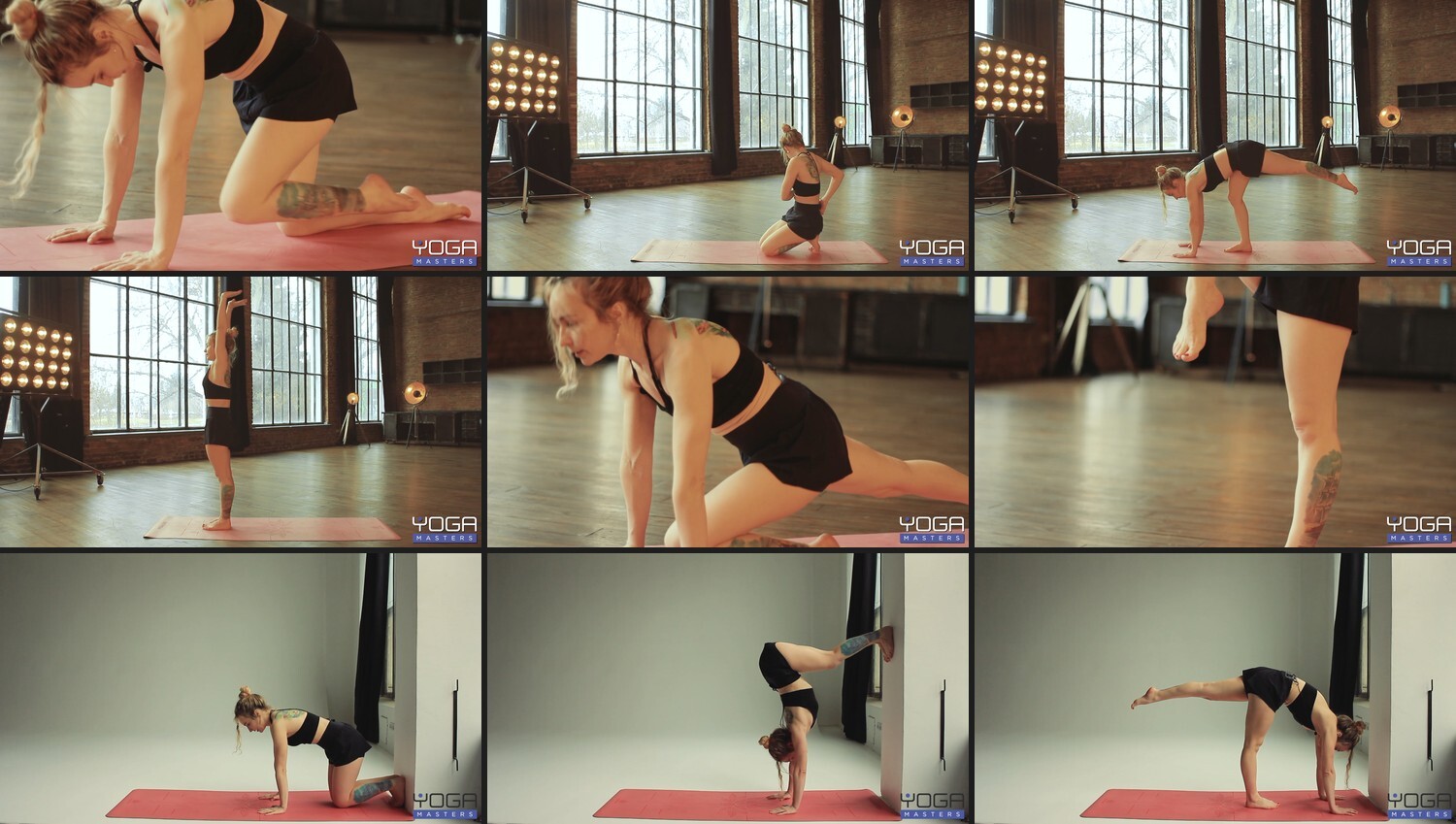
Lesson 1. Preparing the hands (~15 min): correct hand placement (with a separate option for broad or stiff shoulders) and rotating the elbows to stack the joints and open the shoulder girdle. Wrist and finger warm-up: rocking on all fours, torso circles, rising onto the fingertips, wrist rotations with straight fingers — moves that also work as a cool-down. How the fingers work for balance: “push the floor away”, fingertips pressing into the mat. At the wall: walking the feet up into a vertical line and the first kick-ups.
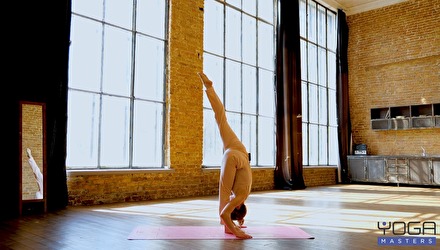
Lesson 2. Setting the pelvis (~17 min): the key to a stable handstand — how to tuck the pelvis and straighten the lower back. You learn it standing and in a squat first, then in cat-cow initiated from the pelvis, in downward dog and in exercises that square the pelvis. Taisiya shows why a strong leg swing either falls short of vertical or tips you over backwards — and how to lift the legs with the lower back instead. Hamstring stretch, single-leg kick-ups at the wall or in the middle of the room, hovering with the legs split.
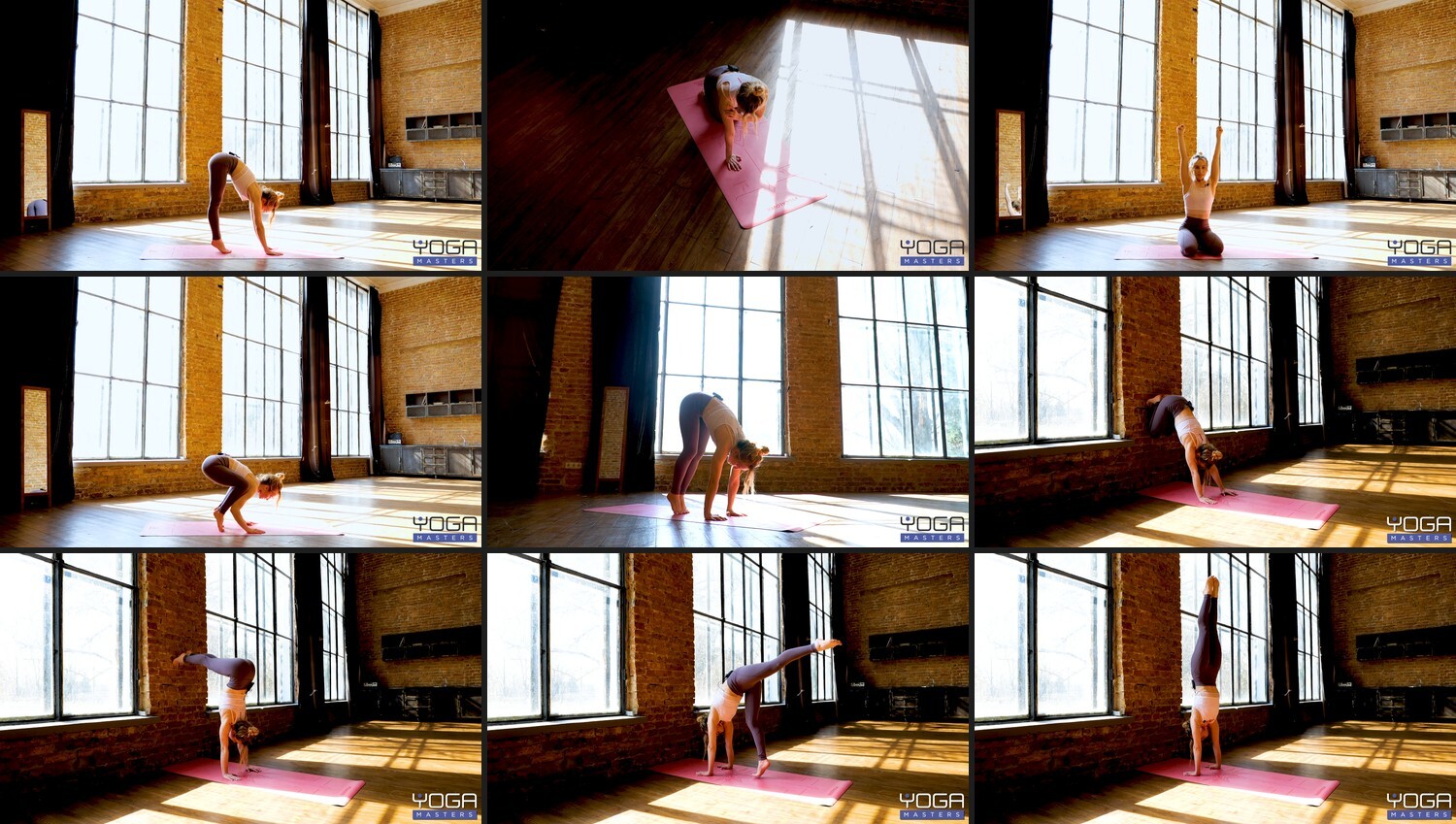
Lesson 3. Basic handstands (~34 min): a dynamic practice with detailed cues. Wrist and neck warm-up, cat-cow, round-back plank, jumps across the mat, “handstand tone” while standing. Single-leg kick-ups from downward dog, the chair position (Utkatasana) for a two-foot jump, and two jump options — for flexible students and for those who can’t fold forward yet. Flow: handstand — Chaturanga — upward-facing dog — downward dog. At the wall: back-to-wall and face-to-wall drills, balancing as the feet come away from the wall. To finish — an ab exercise and a cool-down for the hands and wrists.
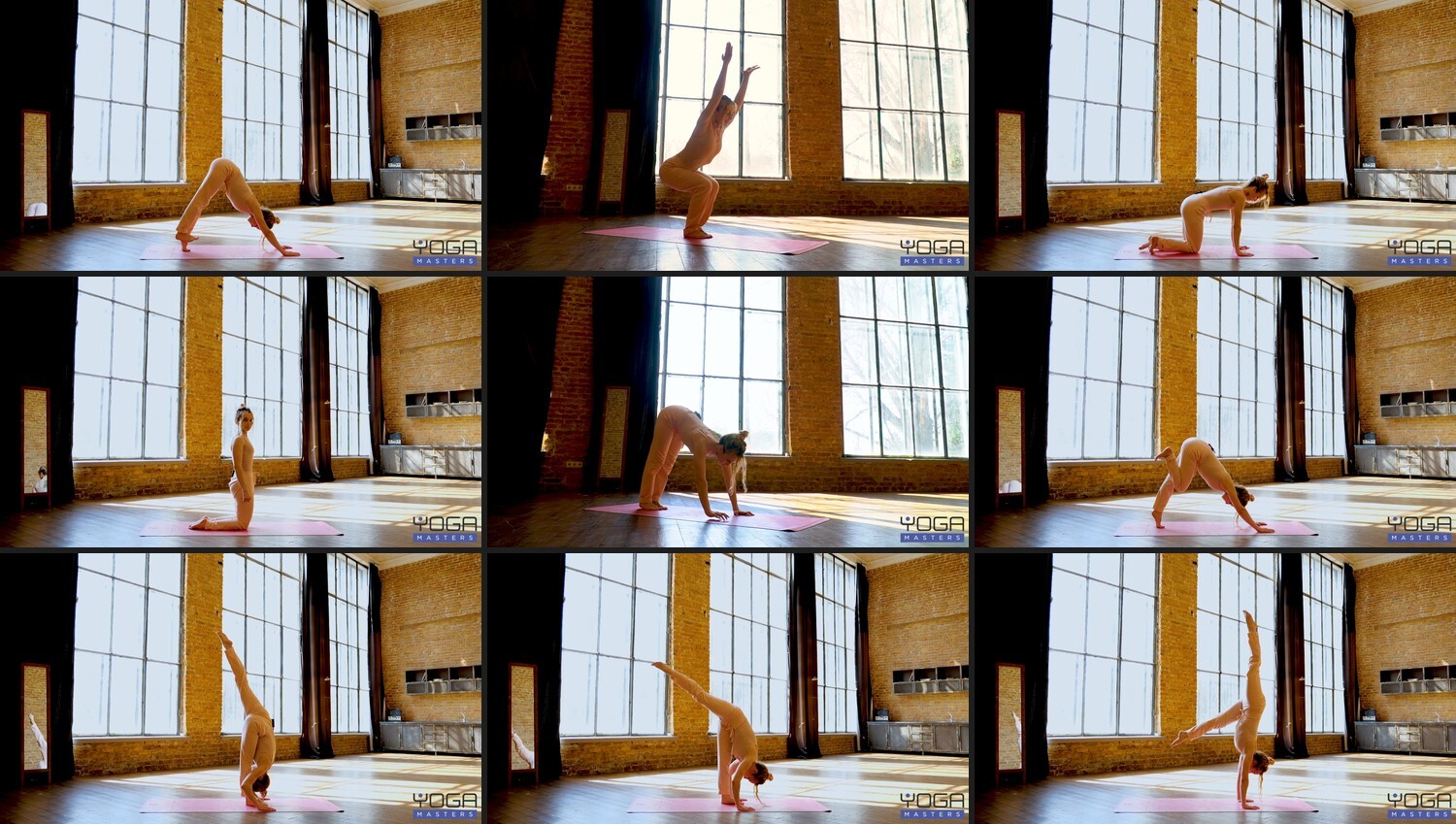
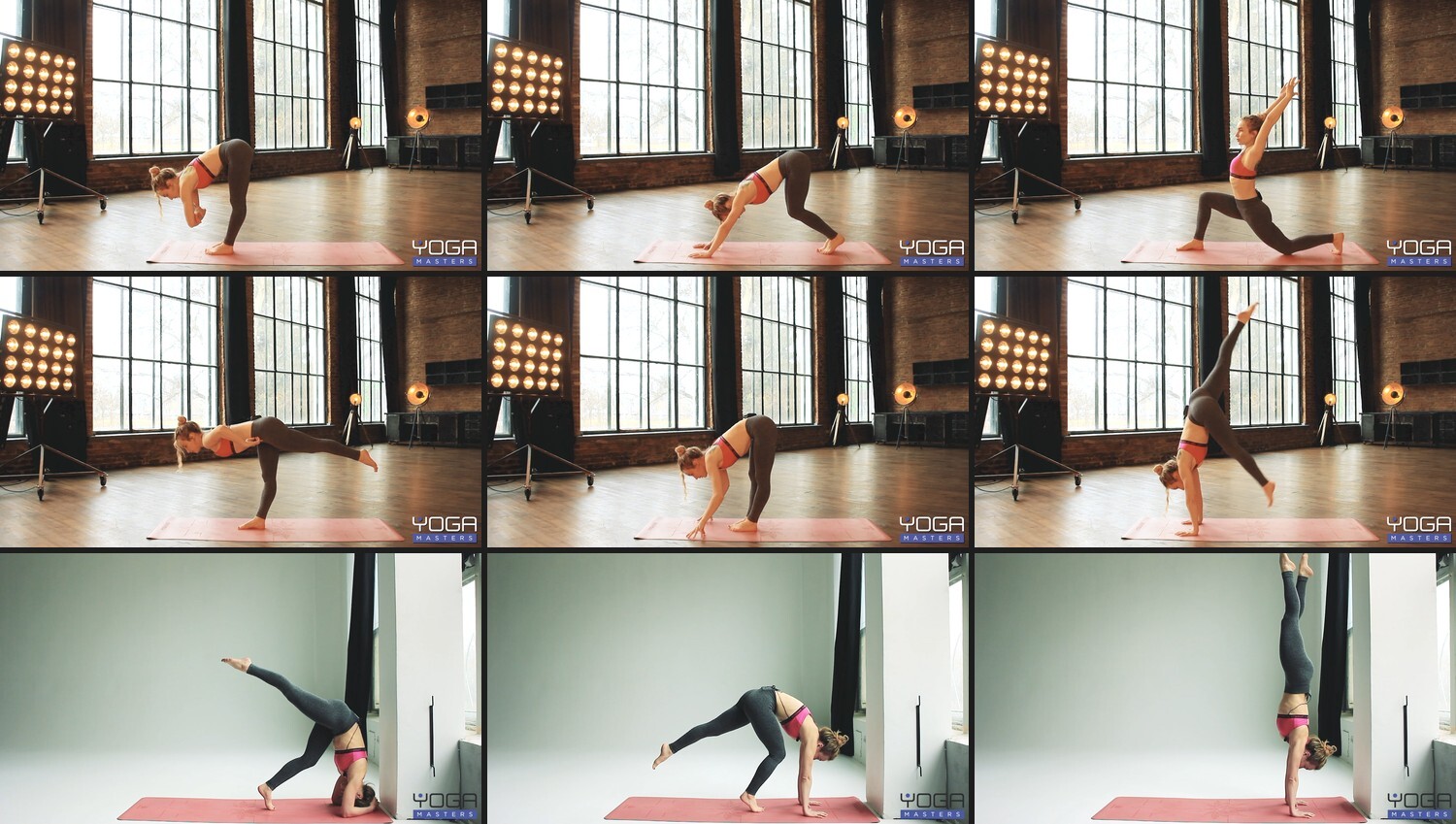
Lesson 4. Refining your handstands (~45 min): a dynamic session to consolidate everything. The “handstand set-up” standing and lying on your front, hand placement and active palms (“tiger paw”). A flow in the middle of the mat: downward dog, forward fold, lunge, warrior and Warrior III with a squared pelvis — and from there single-leg kick-ups into a handstand. Taisiya explains why the pelvis must stay square and how to kick up for control rather than by luck. Two-foot jumps from a squat and across the mat, dolphin pose, an ab exercise. At the wall: headstand as a model for entering a handstand, lifting the leg with the pelvis with your back to the wall, and a face-to-wall handstand with bent knees — straightening the lower back and finding vertical. To finish — supine twists and a wrist cool-down.
Challenges and modifications: the hardest part is catching your balance without the wall and not arching the lower back. Use the wall as a spotter, fists instead of palms if your wrists struggle, and the jump from downward dog if you lack flexibility. If your shoulders are tired, take a break: handstands are best practised fresh.
The aim of the series isn’t just to get you upside down, but to help you feel, understand and control your body more deeply.
Главный секрет стабильной стойки — подкрутить таз и выпрямить поясницу. Навык осваивается стоя, в кошке и горке, затем растяжка задней поверхности ног и толчки одной ногой у стены.
Динамичная практика с пояснениями: разминка кистей, толчки одной ногой из горки, прыжок двумя ногами из Уткатасаны, связка через Чатурангу и упражнения у стены спиной и лицом к ней.
Закрепление техники: «группировка» и «лапа тигра», толчки в стойку из Вирабхадрасаны III с закрытым тазом, прыжки с двух ног. У стены — стойка на голове как модель выхода и стойка на согнутых ногах.



 Ukrainian
 Russian
 View files


 A series of lessons
 112 minutes
 Medium, Useful for everyone
 Yoga study, Special purpose
 Download for the PC
 Download for the phone
 Master-class
 Video lesson
 Sequence
 A series of lessonsInformative
The review has been accepted and will be published after moderation.